About Hidden Object: Clues and Mysteries
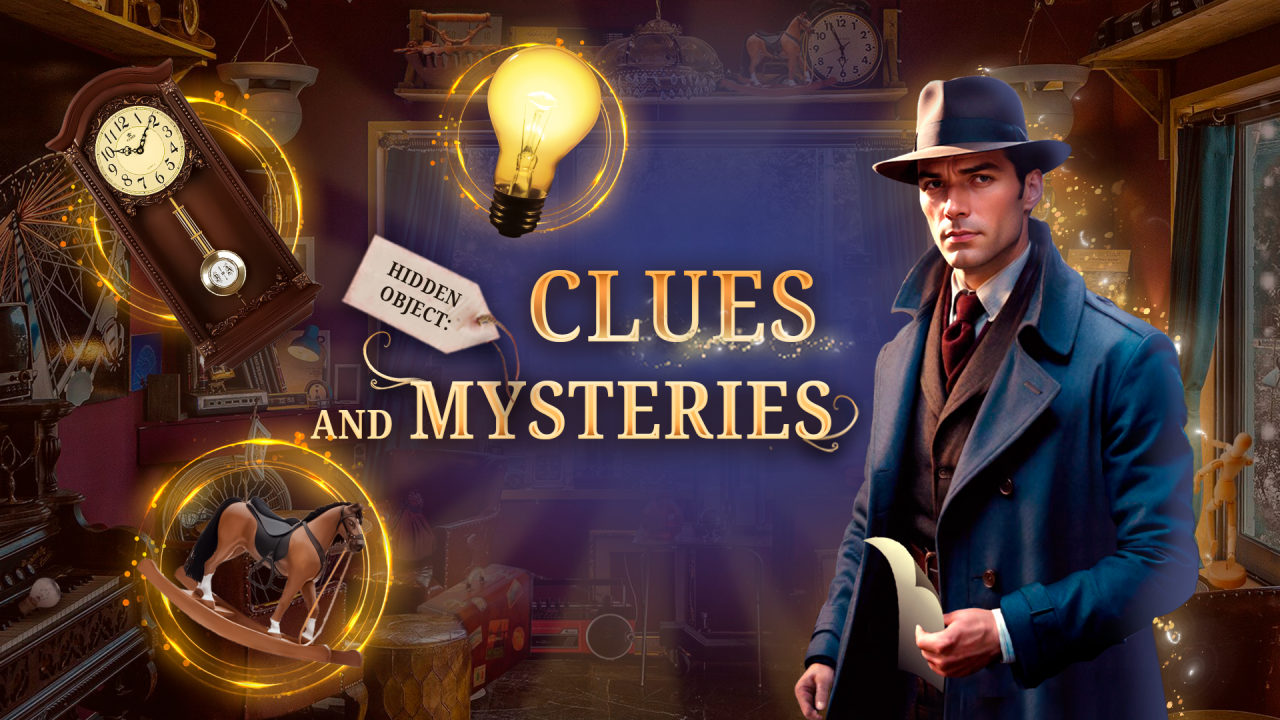
Hidden Object: Clues and Mysteries turns a sequence of illustrated locations into careful visual searches. Each scene presents a list of objects to find among furniture, decorations, shadows, and overlapping shapes. The relaxed pace rewards an organized scan more than random clicking.
The opening story leads into a room with a five-item target strip. Selecting the correct object updates the counter immediately, giving clear feedback before the search continues. Each completed list advances the investigation to another illustrated location.
Reading the target strip
Before searching the room, inspect every picture or label in the target strip. Notice the outline, color, and likely size of each object. An item may appear at a different scale inside the scene, so shape is often more dependable than size alone.
After finding one target, check the strip again instead of continuing from memory. The remaining list becomes shorter and can reveal which part of the room deserves attention next. This small pause also prevents repeated clicks on an object that has already been counted.
Scanning a scene methodically
Divide the location into sections and move through them in a consistent order. For example, examine the upper shelves, then the central furniture, and finally the floor and corners. Following a route makes it less likely that a narrow area will be skipped.
Look along strong edges where objects can blend into frames, table legs, curtains, or patterned surfaces. Also compare unusual gaps and silhouettes rather than searching only for bright colors. Hidden-object scenes often use familiar shapes in places where the eye does not expect them.
Moving and zooming for small clues
You can move left and right through a location and zoom in on small details. Use those tools when the full scene makes small targets difficult to distinguish. Enlarge one section, inspect it completely, and then move to the next area rather than panning without a plan.
Zoom back out after a detailed search to restore the overall layout. A target that looks unclear at close range may be easier to recognize from its full silhouette. Alternating between an overview and focused inspection is more reliable than staying at one scale.
Solving without rushing
The calm presentation is designed for observation, so take time to confirm a shape before selecting it. If one target remains hidden, switch to another item and revisit the difficult one after the scene has become less visually crowded.
The detective narration introduces the mystery, but progress still depends on completing the item list in each location. Treat the story as context and the target strip as the immediate objective. Finishing searches accurately keeps the investigation moving.
Hidden Object tips
- Study the target shapes before clicking inside the room.
- Search in sections so shelves, corners, and floor areas are not skipped.
- Use zoom for fine details, then return to the overview to check silhouettes.
- Inspect edges and patterned surfaces where objects can blend into the background.
- Leave a difficult target temporarily and return after clearing easier items.
Game information
Hidden Object: Clues and Mysteries is a single-player search game for desktop, Android, and iOS. It uses a portrait layout, its interface is in English, and it does not include in-game purchases. Mouse clicks and touchscreen taps select objects, while the navigation and zoom controls help inspect crowded areas.
Explore more visual challenges in the Puzzle Games collection. For another story-led puzzle with a calmer pace, Piece of Cake: Merge & Bake replaces room scanning with ingredient chains and café restoration.